Fact or Fiction: Walking the Plank

“Walking the plank” – was it historical reality or fictional myth?

The image of a pirate forcing a captive to “walk the plank” has become an enduring trope in popular culture. Depicted in numerous books and films, this gruesome practice is often associated with the ruthless and lawless world of pirates. However, it is crucial to distinguish between historical reality and fictional embellishments.

The golden age of piracy, which spanned roughly from the late 17th to the early 18th century, was a time of lawlessness and violence on the high seas. While pirates indeed employed various brutal methods to instill fear and maintain control, there is limited evidence to suggest that “walking the plank” was a widespread practice during this period.

Historical records indicate that pirates resorted to more efficient and expedient methods of disposing of their captives, such as marooning them on uninhabited islands or simply executing them on board. These methods allowed pirates to swiftly eliminate threats without the elaborate preparations associated with “walking the plank.” The absence of specific accounts mentioning this practice, despite ample documentation of pirate activities, suggests that it was not a commonly employed method of execution during the golden age of piracy.

Daniel Defoe first brought the practice into the public imagination in his 1724 book A General History of the Pyrates, where Defoe described ancient swashbucklers in the Mediterranean telling their Roman captives they were free to go if they followed the ship’s ladder into the waves to fend for themselves.

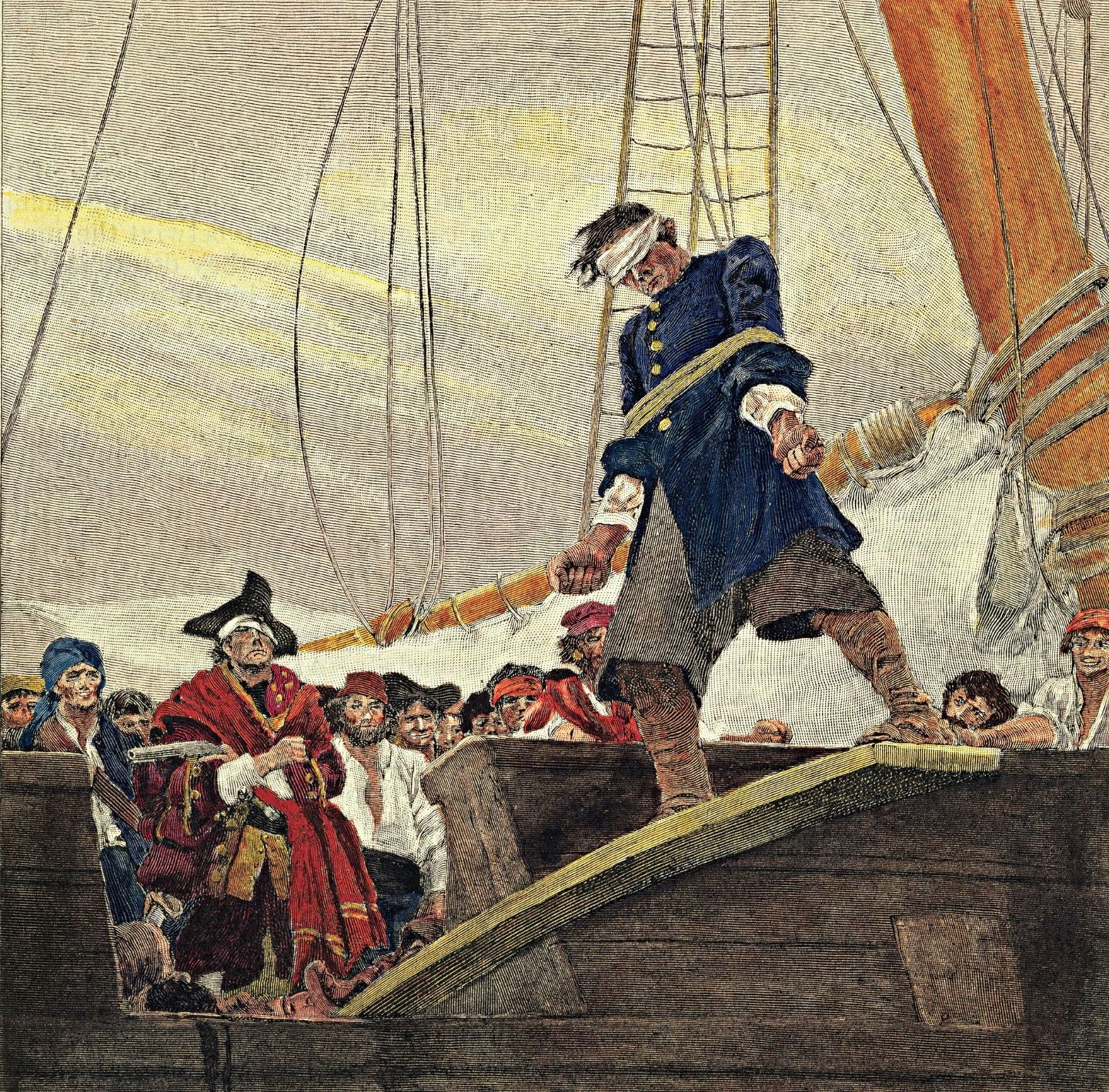
In 1837, Charles Ellms published The Pirates Own Book, which included an illustration of a prisoner falling from a “death plank” into the sea. In 1884, Robert Louis Stevenson included tales of walking the plank in his classic pirate epic, Treasure Island. And in 1887, Howard Pyle cemented the image in the popular imagination when his famous illustration “walking the plank” was published in a Harpers Weekly article.

Filmic representations, particularly during the mid-20th century, heavily featured “walking the plank” as a dramatic and suspenseful climax. Movies like “The Black Swan” (1942) and Disney’s “Peter Pan” (1953) showcased this practice, solidifying it as a staple in pirate lore.

So, what is the verdict? Considering the evidence at hand, it is highly unlikely that “walking the plank” was a widely practiced method of execution during the golden age of piracy. While pirates undoubtedly employed various forms of violence and intimidation, the historical accounts and records available do not substantiate the prevalence of this specific method.

The popularity of “walking the plank” owes more to the power of literary and cinematic imagination than to historical accuracy. It became a captivating plot device that heightened suspense and showcased the villainous nature of pirates, appealing to the audience’s desire for adventure and drama. As such, it remains an enduring symbol of the golden age of piracy, but a fictitous one. As we continue to explore and consume pirate-themed literature and media, it is crucial to appreciate the distinction between historical reality and fictional embellishments, acknowledging that the vividness of our imagination often shapes our perception of the past.
Review: Treasure Island

Treasure Island, written by Robert Louis Stevenson and published in 1883, is a timeless classic that continues to captivate readers of all ages. This thrilling adventure novel takes us on a journey filled with pirates, buried treasure, and all the treachery that greed creates. With its vivid characters, gripping plot, and expert storytelling, Treasure Island stands as a true masterpiece of its genre.

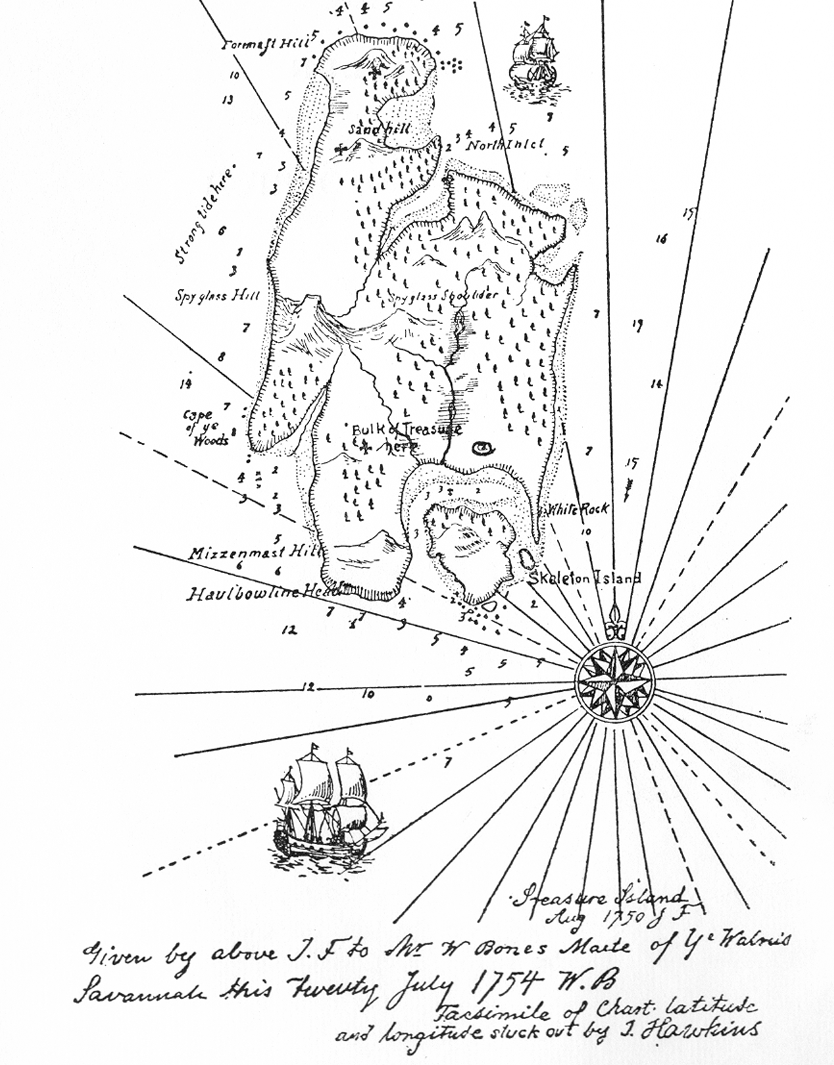
Set in the eighteenth century, the story begins when young Jim Hawkins stumbles upon a mysterious map in the belongings of a deceased pirate. Realizing that it leads to the fabled treasure of the infamous Captain Flint, Jim embarks on an adventure of a lifetime. Determined to uncover the hidden fortune, he joins a crew, including the cunning Long John Silver, and sets sail to the enigmatic Treasure Island.

One of the novel’s greatest strengths lies in Stevenson’s ability to craft memorable and multifaceted characters. Jim Hawkins, the earnest and brave young protagonist, is the heart and soul of the story. His innocence and resourcefulness make him an endearing character that readers of all ages can relate to. The portrayal of Long John Silver, the iconic pirate with a silver tongue, is equally remarkable. Stevenson brilliantly captures the complexity of Silver’s nature, blurring the lines between good and evil, which adds depth to the narrative.

Moreover, the pacing of Treasure Island is exceptional. Stevenson masterfully weaves a gripping plot, seamlessly shifting between moments of suspense, action, and intrigue. As readers turn the pages, they will find themselves swept up in a whirlwind of swashbuckling adventures, close encounters with danger, and surprising twists. The suspense builds steadily, keeping readers on the edge of their seats, eagerly anticipating the next turn of events.

The atmospheric setting of Treasure Island is another notable aspect of the novel. From the creaking of the ship’s timbers to the salty air of the high seas, Stevenson paints a vivid picture that immerses readers in the world of pirates and hidden treasures. His descriptions of the island itself are evocative and paint a clear image of a remote, untamed place shrouded in mystery and danger. The detailed imagery allows readers to feel as if they are right beside Jim Hawkins, navigating through treacherous landscapes and unraveling the secrets of the island.

Treasure Island also explores themes of loyalty, morality, and the dichotomy of human nature. Through the various characters, Stevenson delves into the complexities of right and wrong, making readers question their own definitions of morality. Long John Silver’s shifting allegiances, for instance, challenge the notion of absolute good and evil, reminding us that people are capable of both heroism and villainy.

Treasure Island is a must-read for anyone drawn to the sea in search of an unforgettable adventure. Robert Louis Stevenson’s masterful storytelling, rich characterizations, and captivating plot make this novel a true classic that has stood the test of time. Young and old will be enthralled by the tale of Jim Hawkins and his quest for buried treasure. From the first page to the last, Treasure Island serves as a gateway to a world of excitement and imagination, leaving readers hungry for more high-seas escapades. So, grab your compass, hoist the sails, and get ready for a great read!

A Cape Cod Tale

“Black” Sam Bellamy & the Whydah

There is a lot of history that slowly passes as the short, dramatic and easy to remember versions take hold. As a result, there is truth everywhere that is fading away. Some is lost to urban sprawl, and some to books no longer read. Some to smartphones and short attention spans, other relics are washed away by years of storms, sinking back into the wet sand to rot with time. When we think of pirates we most often think of the images and environs that movies, children’s books and video games have left us. Pirates of the Caribbean: looting and pillaging in far off tropical climes, burying hordes of treasure and carousing off into the vanishing mists of legend. Many of those legends are rooted in fact, but there is more meat to the stories than the icons leave us, and so much truth around the periphery that has been lost.

New England, for example, was once a flourishing region of pirate activity. Privateers and worse sailed from ports like Salem, Boston, Newport, Providence and New York. Cape Cod, too, has it’s buccaneering past. How much of it will be lost forever we will never know, but there is still evidence if you know where to look.

One colorful tale associated with the cape is that of Captain Samuel Bellamy. Bellamy was born in England and came to Cape Cod in 1715. Here he fell in love with Maria Hallett, a local girl whose attraction may, in fact, have lured him to his death. He left for the Caribbean to excavate for treasure from Spanish Galleons sunk in a hurricane, but his venture was unsuccessful and he ultimately turned pirate.

“Black” Sam Bellamy’s crew took over fifty ships in the course of a year. One of his greatest prizes was the capture of the Whydah, a slave ship rich in gold dust, ivory tusks and other treasure from Africa. The Whydah, a three masted galley of three hundred tons burthen, with eighteen cannon and a crew of fifty, became Captain Bellamy’s flagship.

In the spring of 1717 Bellamy’s band of cutthroats came north, past the colonies in Bermuda, Virginia, Maryland and New York. It is not known what brought Bellamy back north from the Caribbean. He is said to have begun work on a fort at the Machias River in Maine, in an attempt to create a place for a free society of Pirates, much as the Isle Sainte Marie off of Madagascar is said to have been. Although the idea is intriguing, those with a more romantic flair lean toward the idea that it was his love for Maria Hallett that brought Bellamy north to his doom on the shores of Cape Cod.

On their way to New England, the pirates continued to prey on shipping. One unfortunate but bold Boston sailor, a Captain Beer, had his sloop taken off of Block Island. He related the tale that Bellamy and his crew took all of his goods, then decided they could not risk giving him back his ship. Bellamy’s speech to the captain is chronicled in Captain Charles Johnson’s A General History of the Robberies and Murders of the Most Notorious Pirates, and testifies to the rebellious freedom that drew many to the life of a pirate rogue:

“I am sorry they won’t let you have your sloop again, for I scorn to do any one a mischief, when it is not to my advantage; damn the sloop, we must sink her, and she might be of use to you. Though you are a sneaking puppy, and so are all those who will submit to be governed by laws which rich men have made for their own security; for the cowardly whelps have not the courage otherwise to defend what they get by knavery; but damn ye altogether: damn them for a pack of crafty rascals, and you, who serve them, for a parcel of hen-hearted numbskulls. They vilify us, the scoundrels do, when there is only this difference, they rob the poor under the cover of law, forsooth, and we plunder the rich under the protection of our own courage. Had you not better make then one of us, than sneak after these villains for employment?”

When the captain replied that his conscience would not let him break the laws of God and man, the pirate Bellamy continued:

“You are a devilish conscience rascal, I am a free prince, and I have as much authority to make war on the whole world, as he who has a hundred sail of ships at sea, and an army of 100,000 men in the field; and this my conscience me: but there is no arguing with such snivelling puppies, who allow superiors to kick them about deck at pleasure.”

During the voyage north Bellamy had secured a small fleet of three ships: the Whydah, a snow under the command of pirate captain Montgomery, and a small merchant pink laden with Madeira wine. Drunk from the capture of a merchant vessel laden with wine, the crew ran into a gale as they tried to pass north from Nantucket Shoals up around the eastern arm of Cape Cod. The northeaster ultimately drove the ships onto the shoals off of the coast of Wellfleet, near what is today Marconi Beach. All save two of the souls on board the Whydah perished in the surf as the ship was broken up by the seas.

One, Thomas Davis, had been forced into the crew when his ship was taken earlier that year. Much of what we now know about Bellamy we know through his accounts. The other was a Nauset Indian named John Julian, who had washed up on the beaches of his homeland. That evening, Davis and Julian sought help at the home of local Wellfleet residents, who with their neighbors scavenged up as much of the ocean’s bounty as they could. In the morning, when other local Cape Codders arrived, they found bodies and coins scattered all over the beach.

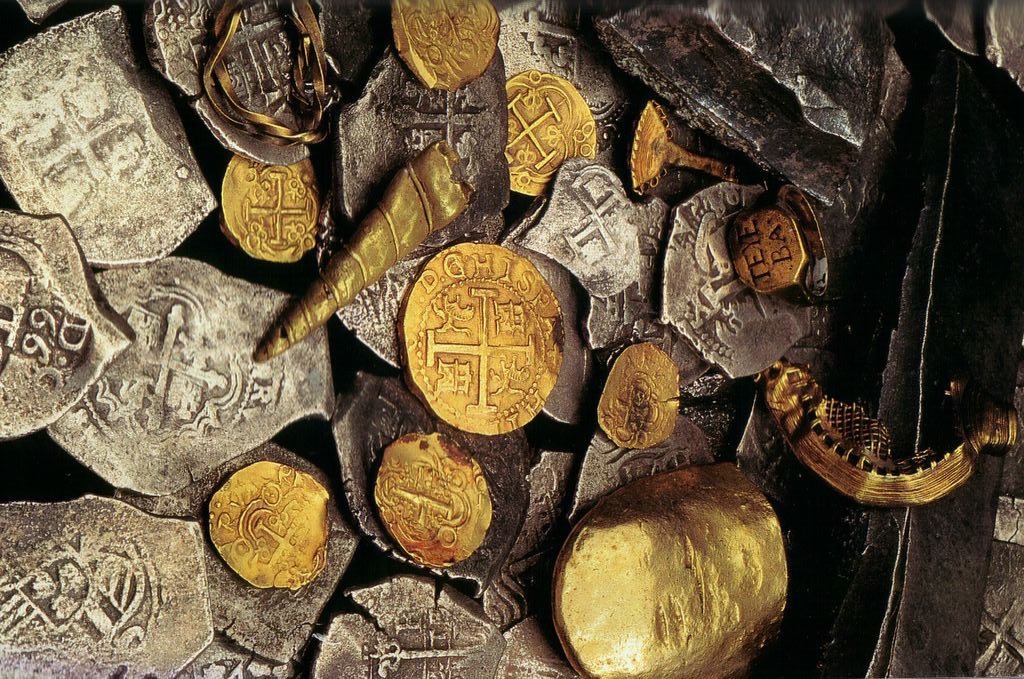
In the years that have followed many people have found the occasional artifact washed up on the shore. But, it was not until Barry Clifford, a local treasure hunter, discovered the remains of the wreck of the Whydah in 1985 that the true scope of Bellamy’s treasure was known. Clifford’s discoveries continue to this day, and can be viewed at the Whydah Pirate Museum in West Yarmouth, MA. This is one of only two pirate wrecks ever found in modern times, and the artifacts tell the story of what pirate life was truly like.

So, if you find yourself yearning for the sea and a bit of adventure, take a drive out on route 6 to Marconi Beach in Wellfleet. Perhaps, if a storm has just come through, you’ll find an old coin or some musket shot washed up on the beach. And, if your appetite is only slightly satisfied by the waves of the Atlantic, ceaselessly rolling over the graves of Bellamy and his men, head to the Whydah museum to get a glimpse of real history before it fades…